Tuesday, June 3, 2014

The Fish arriving tomorrow;

This week’s First Fish order will have:

Apistogramma cacatuoides "Orange Flash"

Apistogramma cacatuoides "Super Red"

Mikrogeophagus ramirezi "German Blue Ram"

Corydoras habrosus "Spotted Dwarf Cory"

Corydoras sp. "Lazer Green Corydoras"

Corydoras sp. "Lazer Orange Corydoras"

Corydoras sp. "New Panda" CW 51 "Bicolor Corydoras"

Panaque nigrolineatus "Royal Plecostomus" L 190

Paracheirodon innesi "Neon Tetra"

Ladigesia roloffi "Jelly Bean Tetra" (Dwarf)

Barboides gracilis "Dwarf Amber Barb" (Micro)

Microdevario kubotai "Neon Green Rasbora" (Micro)

Trigonostigma espei "Pork Chop Wedge" (Dwarf)

Boraras maculatus "Pygmy Spotted Rasbora" (Micro)

Boraras naevus "Strawberry Rasbora" (Micro)


Osteoglossum bicirrhosum "Silver Arowana" (Not Micro) LOL!!


Friday, May 30, 2014

What is an Axolotl, anyway? By: Ashley Moore


By: Ashley Moore

What is an Axolotl, anyway? The axolotl (Ambystoma Mexicanum) is an amphibian. Unlike most amphibians, the axolotl never goes through metamorphosis. Instead, they stay in their aquatic juvenile form their entire lives.

Common name: Axolotl


Scientific name: Ambystoma Mexicanum

Originated from: Mexico

Lifespan: 10-20 years with proper care.

Size: 10-12 inches. Not sexable until 7+ inches or after 1 year old.

Housing: A 10-gallon aquarium is generally a suitable minimum tank for one adult axolotl. It is acceptable to keep one adult axolotl per every 10 gallons of water, but if you can give them more space, they will appreciate it. Axolotls live on the bottom of the tank, so a tank with more floor space is better than a deep tank. Generally plan for at least one foot of floor space per axolotl to house them comfortably. They can jump out of the tank, so a cover is a good idea. Juveniles can be housed in Tupperware tubs with 100% daily water changes until you move them to their permanent tank.

Temp: 64F-68F is ideal. Try to maintain the tank under 70F; tank temperatures over 75F become dangerous.

Water: Hard water, pH 6.5 to 8 acceptable, pH 7.5 ideal. They do well in dechlorinated tap water. Use a water conditioner that treats for chlorine, chloramine, and heavy metals.

Substrate: Axolotls eat by sucking up food off the bottom of the tank. Because of this, keeping them on aquarium gravel is extremely dangerous, as swallowed gravel can block their digestive tract and kill them. Axolotls under 5" long should be on a bare bottom tank. Axolotls over 5" can live on fine sand or a bare bottom. Generally aquarium sand or rinsed play sand are good options and if you choose to use sand, make sure to rinse well.

Light: The axolotl has no eyelids, so they dislike bright light and are very sensitive to it. They do not need lights for their habitat. If you do give them a light, make sure they have hiding places that they can use to stay in the dark if they prefer.

Hides: They will be more comfortable in a tank with hide spots even without a light. Give them something to use as a "cave" for them to be happy. Avoid any decorations with sharp edges, as it is easy to damage their soft body.

Filtration: Axolotls produce large amounts of waste, so good filtration is necessary to keep them healthy. Most people use a sponge filter, a hang on back filter, or a canister filter. They do not like strong currents in the tank, so make sure to adjust the flow of the filter to a low setting, or point it at a decoration to break up the current.

Cycling: Your filter is a home for good bacteria that eat the waste produced by the axolotl. Cycling the tank is the process of growing the good bacteria you need to break down the ammonia your axolotl makes as waste. Usually a new tank takes about 2 months to fully cycle. 


Thursday, May 22, 2014

New Fish list at Finatics

Sorry for the delay in posting the new fish lists, here is a list of the fish we received this week and there is an order arriving on Friday as well.

Here Now:
Freshwater Pea Puffers


Raphael Striped catfish

Common Otocinclus Algae eaters

Corydoras pygmaeus

L191 Royal Plecostomus

Fire Eels 5”

Red Oranda’s with nice head growth

Red Ryukin

Bumble Bee Gobies

Rhino horn Gobies

Gold Gourami

Pearl Gourami

Red Paradise Fish

Carnival Crabs

Neon Red Crayfish

Crystal Shrimp

Red Swordtails

Black Sword tails

Tiger Sword tails

The above are available on Friday for Sale)


Pond Comet Goldfish (Small)
Feeder style Guppies


Arriving Friday:
Micro Tiger Rasboras
(Have no photo, but, I was told they are amazing!)

Elephant Nose

Scarlet Badis

Freshwater Hog chokers (Flounders)

German Gold Rams

Orange/Blue Rili Shrimp

Neon Tetra XLG

Cardinal Tetra LG

Corydoras Arcuatus (Skunks)


Dwarf Blue Crayfish

Gold Claw Fiddler Crabs

Nigerian Mudskippers

Butterfly Koi

(Available Tuesday)

Also; Coming Soon....
Axolotl's
Brackish Water Aquarium Fish
Native Fish... Maybe...  .;)

We will be CLOSED on Monday for 
Memorial Day!
Have a great-Safe Weekend!!!


Thursday, May 15, 2014

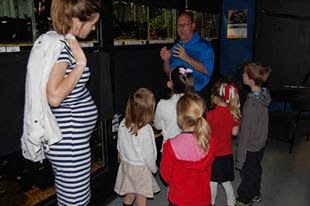
A Fun School Tour!

Recently,  Finatics Hosted the students from Corem Deo Christian academy.

We all had a fantastic time, even with me hardly having a voice to speak, the students were polite, asked many great questions and I was impressed with the “Fish” knowledge they possessed.

Here are some great shots of that event.


Thank you, You kid's were a lot of fun to have come and visit us!

Tuesday, April 29, 2014

A US native fish tank?


Have you ever wondered about keeping small fish you have seen in local rivers and streams?
The hobby of collecting “Native” fish species can be fascinating and rewarding.

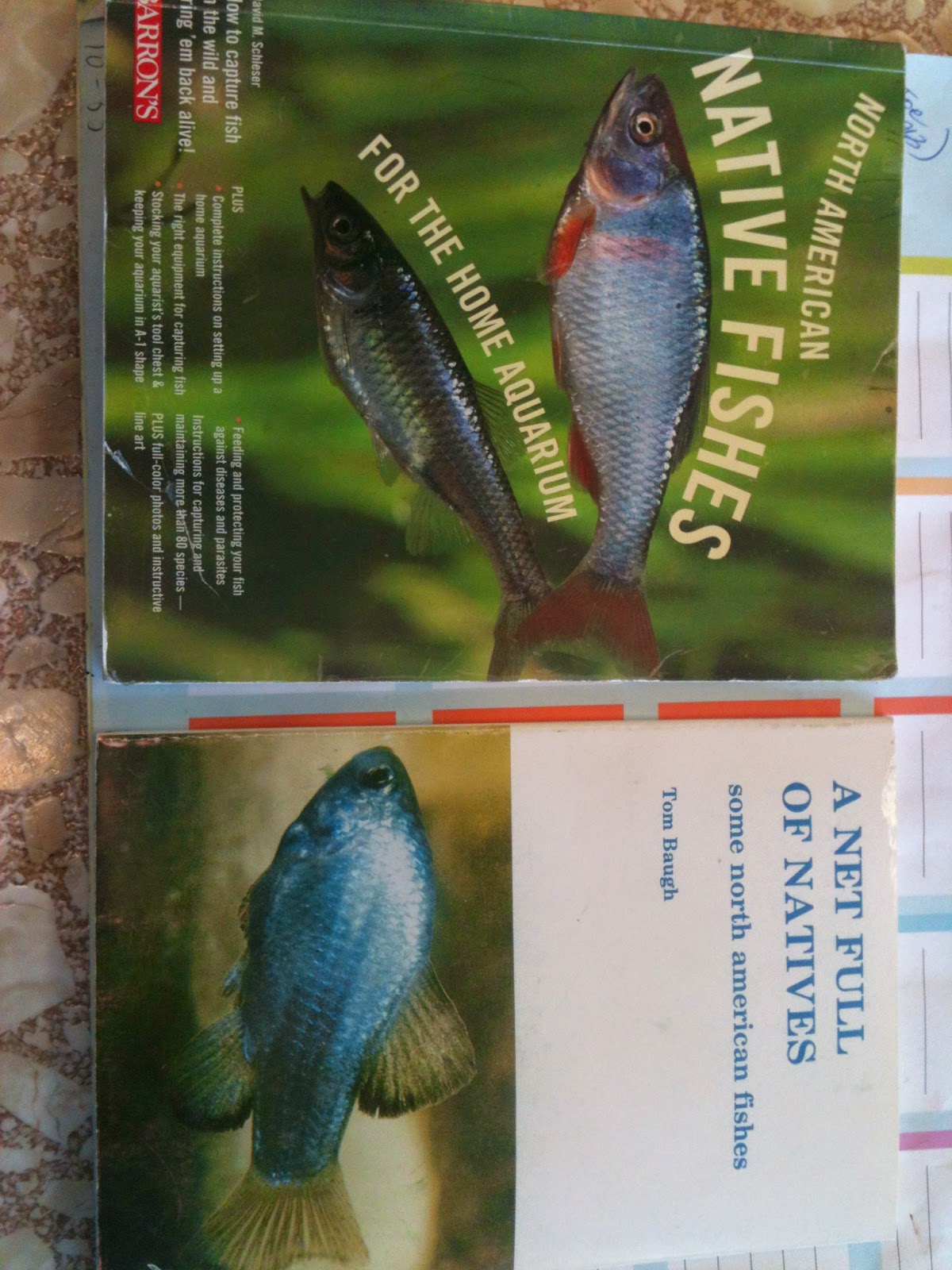
Many years ago, I ordered a small selection of books from FAMA (Freshwater and Marine Aquarium Magazine) a publication that is long gone.  Among the books I received was a book called “A Net full of Natives, some North American fishes”, by Tom Baugh.  After glancing through the book,  I was hooked.
I devoured it and discovered that there are some amazing fish right here in our own rivers and streams.

A second book I purchased (Now also out of print) “North American Native Fishes for the home Aquarium” by David M. Schleser. This book is written with the aquarium hobbyist in mind and touches on species that are commonly available as well as many that are legally collectable and that will live in the home aquarium without a heater.


Maybe you did not realize it but some of the fish you already keep are/were native species.
Fish such as Sailfish Molly’s are from the eastern US (And Mexico) The Texas Cichlid, the Bind Cave Tetra, the Florida Flagfish. Also, some bait and tackle shops sell live “Minnows” many times in those fish tanks are some real jewels and these amazing fish are many times sold as “feeder” fish as well.
In July 2003 TFH (Tropical Fish Hobbyist) magazine did an entire issue on Native Fishes for the home aquarium and featured some really amazing “Darter” fish from the Eastern US. IF your interested in taking your hobby of fish keeping in a different direction and would like to try something interesting that you can involve your kids in. why not consider making a family adventure to the local river, collect and keep some of the fascinating small species of river fish?  


Notes: Keep in mind that any fish that is a game fish (Something that you can catch on tackle) would require a fishing license to catch and possess - with the idea of keeping native fish in mind ALWAYS check local and state laws that could govern the collection and keeping of any native fish.


Lastly; Never release ANY fish back into a river that has been in your home aquarium, the results of this could be devastating for local fish populations; because of  diseases and due to the fact that Non-Native fish released in native rivers and streams can totally ruin the ecosystem and cause damage to the environment, we never want the aquarium fish hobby to be blamed for anything like this!


We started a new project here at Finatics. We are setting up a 120 Gallon Native species fish tank.
These will not necessarily be only Washington state native species but they will be US native species.
There are some amazing live bearers and some Chub and Shiner that look as good as many of the schooling tetras you normally see for sale.
 

The Aquarium is a 120 Gallon “Show” with a Fluval FX5 filter (607gph) running a Chiller at 65f.
What we are planning to display in this tank;  Darters, shiners, chub and top minnows and maybe other species as well. We would like to also display some native Radar  Crayfish species if compatible.
We plan to add native plants, wood and much more rock to the tank as it seeds.
 
 So as time goes on and your in the shop, stop by and check out our “All-American” fish display, and if your interested in obtaining native species and doing this yourself, let us know we have a fantastic source for fish and advice.


New Signs at Finatics

We installed brand new signs on the front and side of the shop this week-Take a look!


:)

Monday, April 21, 2014

New this week at Finatics:


First, I hope everyone had a fantastic Easter! We took the day off and enjoyed food and friends it was a lot of fun.

On Saturday we received the first batch of, Yvonne Coopers; Brilliant Turquoise Discus, and they are awesome! We are very excited to be exclusive for her Baby Discus that tank bred and raised in Pasco, Washington! They are now available to purchase for $39.99 each. 


We received a few odd Corydoras Catfish as well, one of the highlights is Northern Longnosed Corydoras-Corydoras septentrionalis a tropical freshwater Corydoras belonging to the Corydoradinae sub-family of the Callichthyidae family. It originates in inland waters in South America, and is found in the Orinoco River basin in Colombia and Venezuela. These are long nosed Corydoras and do grow a bit larger as well.


We have some fantastic pieces of Manzanita wood in the shop right now, most of these are mounted on slate tiles and are ready for your aquascape and to have Java moss attached to them so that they will look like trees!

The New Betta’s are very cool; Betta coccina a wild species, can be housed in pairs, species tanks, and community tanks.  Pairs can be housed in a 5 gallon tank, groups should be housed in a 20 gallon tank or larger.  Pairs should be given cover such as caves and plants.  In a pair or species situation it is possible that fry could be discovered in the tanks!


We are receiving a lot of requests for larger quantities of Black Worm. We are now able to offer Black Worm by the Pound. If you are interested let us know and every other week we will get your worms for you. The price is only $35.00 per lb! And don’t forget we have red wigglers too!